

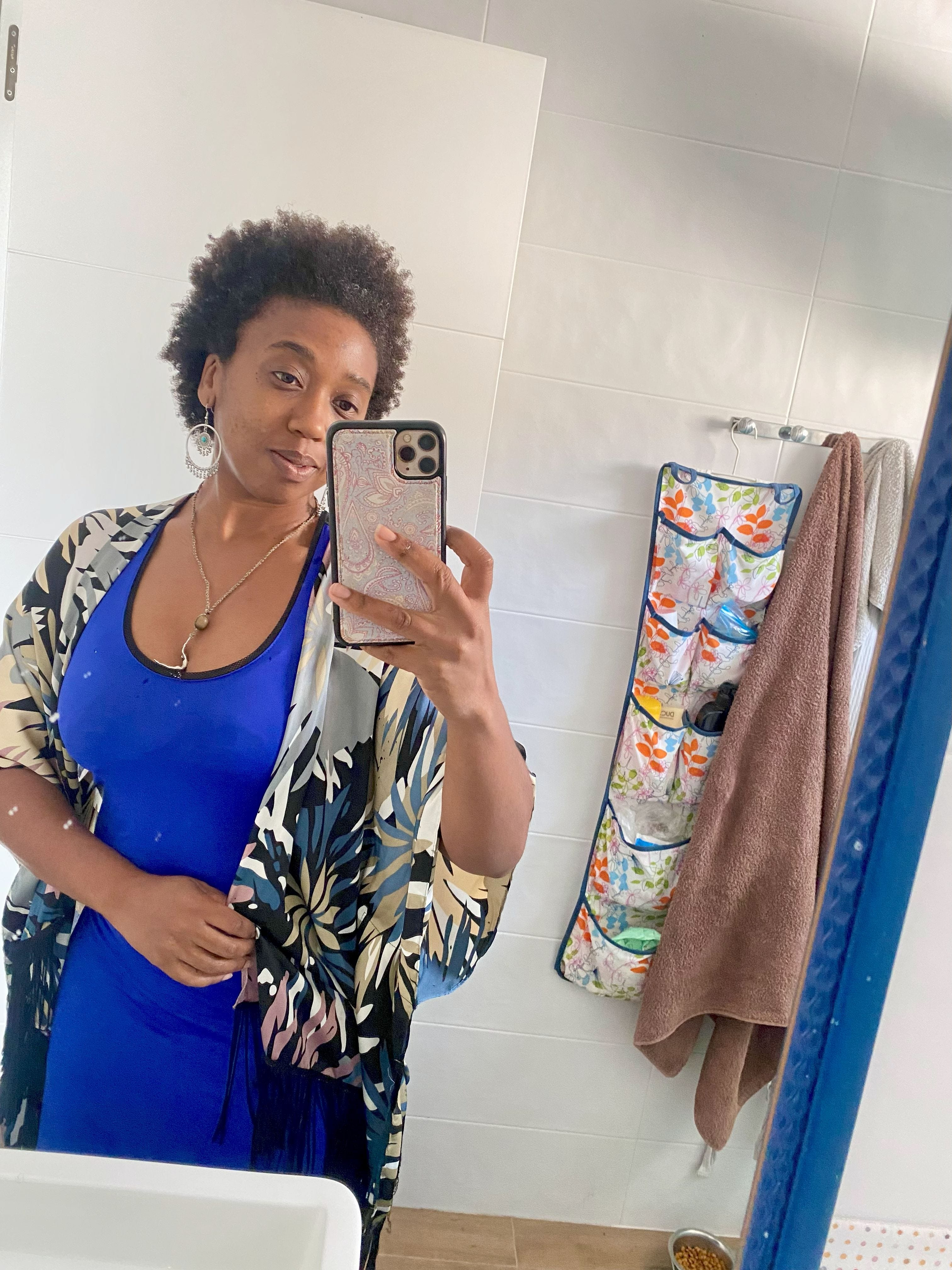
I fear this title has sent some signal only internet trolls can hear. Soon, internet lurkers will bombard my page, read only the title, and assume I’m some stuck-up American. With a head full of assumptions, they’ll begin their rain of hateful comments.
So let me be clear: I do speak Spanish.
About 75% of my days are in Spanish because I’m either talking with my Spanish boyfriend, having a conversation with the fruit ladies at the market, or taking dance classes in Spanish. Let’s not forget my Spanish-speaking friends.
I’m purposely calling myself out because I want to break some of the expectations, misconceptions, and egos around language learning.
I want to talk about my language journey for anyone who is:
Learning Spanish
Struggling with learning Spanish or any other language
Feeling the struggle of being bilingual and expressing yourself
Wanting to come to Spain and wondering how much Spanish they’ll need
If this is you, I hope you feel seen in what I’m about to share.
The beginnings of my Spanish journey
According to my mom, I had a Spanish-speaking babysitter when I was little. Apparently, she spoke to me in Spanish all the time. Either that’s a lie, or I wasn’t listening, because none of it stuck.
Growing up in Southern California, with Mexican friends, Spanish was often in the background—but English was always the star of the show. So when I took three years of Spanish in high school, I did well, but I didn’t focus on retention or speaking.
My lackluster approach to learning Spanish would come back to haunt me when I moved abroad to Panama in 2017. My high school Spanish only helped me about 20% of the time. Ironically, living in a country whose official language is Spanish, I spent most of my time speaking English. Whenever I met a Spanish native speaker, they saw me as an opportunity to practice English.
Nonetheless, I focused on improving my Spanish by taking lessons and studying at YouTube University. When I went out with my Spanish-speaking friends, I would chime in with a few words here and there. Still, there were moments when I stayed silent, pretending to understand the conversations.
My Spanish grew in bursts. One week, I could follow everything and confidently order a mattress for delivery. Next, my brain froze, and I’d say sí to something I didn’t understand—praying I hadn’t just agreed to go out with someone’s cousin.
After two years of studying and pushing myself to start conversations, I reached a solid intermediate level. I was speaking so much that some people were surprised that I knew English.
Moving to Spain with a deceptive level of Spanish
When I moved to Spain, I was ready to speak Spanish with my whole chest. I could navigate Spanish conversations, and I knew it was a matter of time before I was fluent.
And let me tell you—my ego got deflated fast.
The speed, the accents, the intimidation of being in a new country—all of it made it hard for me to understand what people were saying.
You know those moments when you squint your eyes to see something far away? When I listened to my new Spanish friends speak, it felt like my brain was squinting, trying to understand what they were saying.
The hard lesson I learned was that the Spanish I learned in Latin America was distinctly different from the Spanish that’s used in Spain. Let me share some fun facts.
Spanish in Spain is often referred to as español or castellano.
There are six official languages in Spain: Castilian (Spanish), Catalan, Valencian, Galician, Basque, and Aranese.
In my experience, Spanish is the most widely used language. It varies depending on the city, region, and neighborhood. Every corner of Spain has its own distinct expressions.
The Spanish language is heavily influenced by Arabic. In the south of Spain, you can find signs written in Arabic.
The adjustment was not easy, and there were many times I felt ashamed that my Spanish level wasn’t keeping up.
I had never been one of those people who could pick up a language just by listening to it, like you pick up bread from the store. I was envious of those who could go out, listen, absorb, and eventually speak. Me, on the other hand? I was listening, translating, guessing, and fumbling over my words.
With broken confidence and a fear of having to use vosotros (a verb tense mainly used in Spain), the one thing that helped me rebuild my confidence was empathy.
In most experiences—not all—the Spanish people I spoke to in my shaky Spanish were patient, understanding, and helpful.
Some people were rude, made weird faces at me, or assumed that just because I was from the United States, I didn’t speak Spanish. Let’s not focus on them.
Starting to feel like I wasn’t a total failure
Let’s zoom in on where I live—Jaén. The jaenereos greatly helped me with my Spanish by:
Only engaging with me in Spanish, even if they spoke English
Gently correcting me if I made a mistake
Being present with me in situations where they didn’t understand my accent, and still trying to figure out what I was saying
Awkwardly smiling when they weren’t sure what I said
Asking me a ton of questions about my life because they genuinely wanted to learn more about me
Deeper than just learning a language, it’s been a journey of vulnerability. Communication is one of the most important elements of being human. When the means of communication are altered, it can greatly impact how we feel accepted, loved, supported, and seen.
Wouldn’t you agree?
Well, in an effort not to make this a six-page-long post and to adapt to short attention spans, I’ll end this story here as part one.
Please let me know if this resonated with you and if you’d like to hear more about how I embarrass myself weekly speaking Spanish. (Slight exaggeration—but not completely.)
If I seem vaguely interesting to you, I hope you’ll subscribe to my Substack.
If you’re a more visual person, make sure you follow me on the socials
www.youtube.com/kierstenbrown101\
Instagram: @kikimarieb15